By Dr. Roni Sharon – Senior Neurologist, Pain Specialist
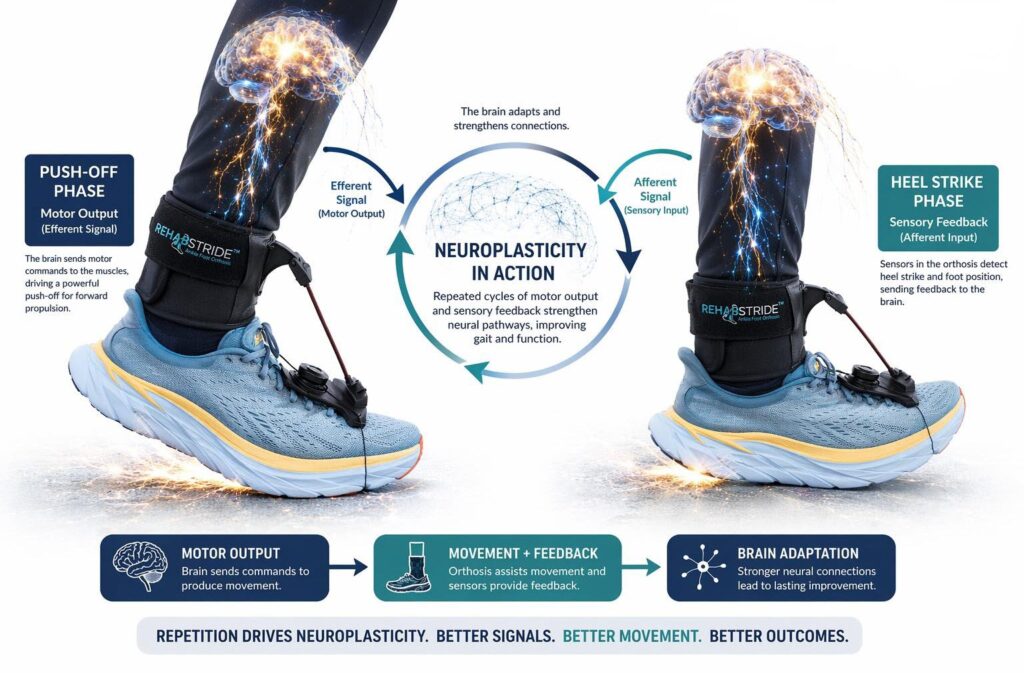
For decades, stroke recovery was viewed through a lens of “compensation.” If a patient lost movement in their hand or foot, the goal was simply to provide a tool that worked around the deficit. However, the modern era of rehabilitation has undergone a paradigm shift. We now know that the brain is not a static organ; it is a dynamic, ever-changing system capable of incredible feats of healing through neuroplasticity.
For survivors dealing with foot drop, this realization changes everything. The choice of a foot drop brace (AFO) is no longer just about preventing a fall – it is about choosing a tool that either assists the brain in relearning movement or inadvertently encourages it to remain dormant.
The Science of Re-Learning: Understanding Neuroplasticity
At its core, neuroplasticity is the brain’s ability to reorganize itself by forming new neural connections throughout life. After a cerebrovascular accident (CVA), certain pathways that control motor function are damaged. To regain movement, the brain must find a “detour” – it must recruit healthy neurons to take over the jobs of the damaged ones.
This process is strictly activity-dependent. The brain follows a “use it or lose it” principle. When you perform a repetitive, purposeful movement, you are essentially “voting” for that neural pathway to strengthen. Conversely, if a limb remains still or is moved entirely passively, the brain sees no reason to maintain those connections.
Why Active Movement is the “Medicine”
Clinical research indicates that for motor relearning to occur, the movement must be:
Purposeful: The brain responds best to goal-oriented tasks (like walking to the kitchen).
Repetitive: Thousands of repetitions are required to solidify a new neural “map.”
Engaged: The patient must mentally and physically attempt the initiation of the movement.

The Foot Drop Dilemma: More Than Just a Tripping Hazard
Foot drop occurs when the muscles responsible for dorsiflexion (lifting the front part of the foot) are weakened or paralyzed. While the physical symptom is a dragging toe or an unstable gait, the root cause is neurological.
When a patient uses compensatory movements—like “hip hiking” or swinging the leg out to the side (circumduction)—to avoid tripping, they are inadvertently “wiring” a dysfunctional walking pattern into their brain. Over time, these compensations become the new “normal,” making it even harder to return to a natural gait biomechanics.
Active AFO Support: Assisting Movement Instead of Replacing It
Foot drop occurs when the muscles responsible for dorsiflexion (lifting the front part of the foot) are weakened or paralyzed. While the physical symptom is a dragging toe or an unstable gait, the root cause is neurological.
When a patient uses compensatory movements, like “hip hiking” or swinging the leg out to the side (circumduction) to avoid tripping, they are inadvertently “wiring” a dysfunctional walking pattern into their brain. Over time, these compensations become the new “normal,” making it even harder to return to a natural gait biomechanics.
The "Passive Trap" of Traditional AFOs
Traditionally, the solution for foot drop has been a rigid or semi-rigid plastic Ankle-Foot Orthosis (AFO). These devices are excellent for safety; they lock the ankle at a 90-degree angle, ensuring the toe never hits the ground.
However, from a neuroplasticity perspective, rigid braces present a significant hurdle. By holding the foot in a fixed position, they often:
Eliminate Muscle Engagement: The brace does 100% of the work, allowing the tibialis anterior muscle to “switch off.”
Limit Sensory Feedback: A natural gait involves a complex exchange of sensory data from the sole of the foot and the ankle joint to the brain. Rigid braces dampen this feedback.
Hinder Motor Relearning: If the brain doesn’t see a “need” to lift the foot because the brace is doing it, the neural pathways for dorsiflexion may continue to atrophy.


A New Standard: The RehabStride™ Dynamic Approach
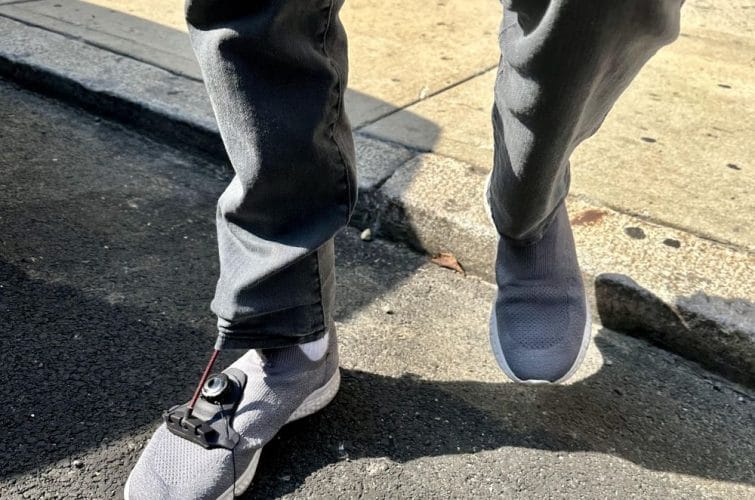
This is where the RehabStride™ AFO represents a departure from traditional bracing. Rather than acting as a static splint, it serves as a functional partner in the rehabilitation process. Its design is rooted in the philosophy that a brace should assist movement without replacing effort.
1. The Power of Dynamic Dorsiflexion
Unlike a rigid shell, RehabStride™ provides a dynamic lift. It uses a tension-based system that assists the foot upward during the “swing phase” of walking. Crucially, it still allows, and encourages – the user to attempt the movement themselves. This creates a biofeedback loop: the patient initiates the lift, the brace helps complete it safely, and the brain receives the positive reinforcement of a successful step.
2. High-Repetition Real-World Training
Recovery doesn’t just happen in a 45-minute physical therapy session; it happens in the 5,000 steps a person takes throughout their day. Because RehabStride™ is lightweight and designed for comfort, patients are more likely to wear it for longer durations. Each step taken in a grocery store or around the neighborhood becomes a mini-rehab session, providing the high-volume repetition necessary for cortical reorganization.
3. Balancing Stability with Challenge
For the brain to change, it needs to be challenged, but it also needs to feel safe. If a patient is terrified of falling, their brain is in “survival mode,” not “learning mode.” RehabStride™ offers adjustable assistance, allowing clinicians or users to find the “sweet spot” where the patient is supported enough to be safe, but challenged enough to stay engaged.
Maximizing Your Recovery: Beyond the Brace
While the right AFO is a critical tool, it is part of a larger ecosystem of recovery. To truly leverage neuroplasticity, stroke survivors should consider the following:
Task-Specific Training: Don’t just walk on a treadmill. Practice walking on grass, carpets, and uneven sidewalks. This “context-based learning” forces the brain to adapt to different sensory inputs.
Mental Rehearsal: Studies show that “visualizing” the movement of lifting your foot can actually activate the same neural circuits as the physical movement itself.
Consistency Over Intensity: Doing 15 minutes of focused gait practice every day is often more effective for the brain than one grueling two-hour session once a week.
The Path Forward: Choosing Recovery Over Compensation
The goal of modern stroke rehabilitation is no longer just “getting by.” It is about reclaiming as much natural function as possible. When you choose a foot drop brace, you are choosing your primary rehabilitation partner.
A rigid brace may offer a quick fix for safety, but a dynamic solution like the RehabStride™ AFO aligns with the fundamental laws of neuroscience. By encouraging active participation, providing sensory feedback, and facilitating thousands of natural steps, it doesn’t just help you walk – it helps your brain remember how.
Neuroplasticity proves that the brain is resilient. By pairing that resilience with the right technology, the path to a more natural, independent gait is closer than ever.
Related posts:
- Ankle Foot Orthosis Demystified: Choosing the Right Brace for You
- The Role of Dorsi Flexion in Safe and Stable Walking: What You Need to Know
- Step Into the Future: Discover the Power of RehabStride AFO Brace for Foot Drop Recovery
- Top 7 Ways RehabStride™ AFO Brace Enhances Your Daily Activities and Independence
- Exercises for Foot Drop with RehabStride™: A Step-by-Step Home Program