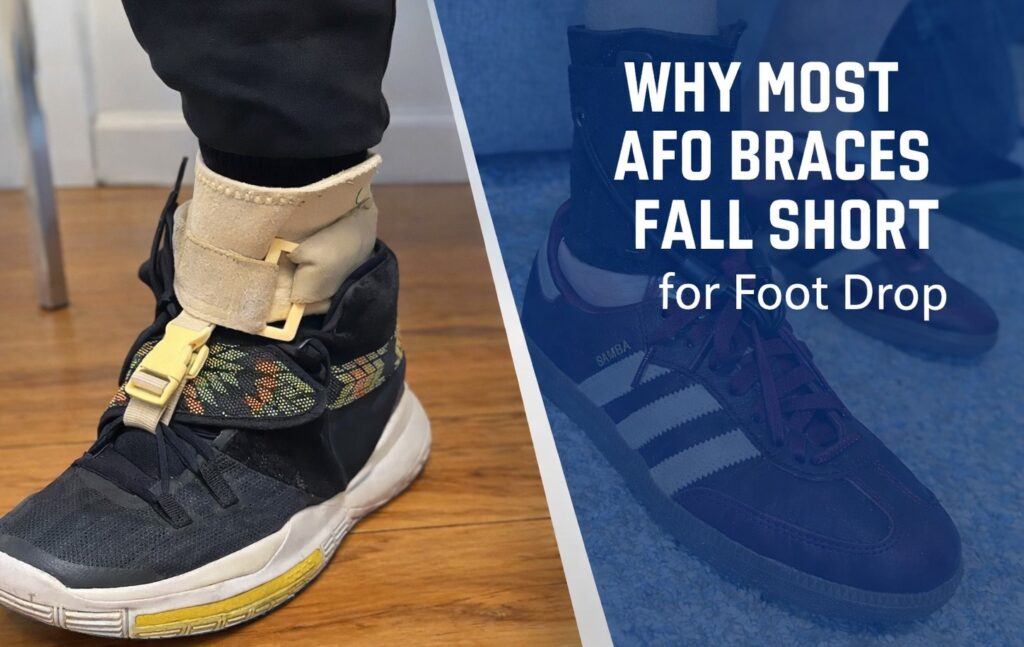
By Gene Shenker, DPT, Founder & CEO, RehabStride™ AFO
Foot drop is one of the most common gait impairments seen after neurological injury or nerve damage, yet it remains one of the most misunderstood. People searching for a foot drop brace are often told that an AFO brace is the solution, but many discover quickly that not all AFOs are created equal. In fact, most traditional ankle foot orthoses rely on passive support, which can unintentionally limit movement, weaken muscles, and restrict long-term mobility.
Understanding the difference between passive AFO support and active AFO support is critical when choosing the right brace. This is where the RehabStride™ AFO represents a fundamental shift in how foot drop is treated.
What Is Foot Drop and Why AFO Braces Are Used
Foot drop occurs when the muscles responsible for lifting the front of the foot (dorsiflexors) are weak or inactive. This often leads to toe dragging, tripping, compensatory gait patterns, and reduced confidence while walking.
Common causes include:
Stroke
Peroneal nerve injury
Peripheral neuropathy
Multiple sclerosis
Spinal cord injury
Traumatic brain injury
An AFO brace is typically prescribed to keep the foot from dropping during the swing phase of gait. However, how that support is delivered makes all the difference.
Passive AFO Braces: Stability at the Cost of Movement
Most traditional AFO braces including rigid plastic AFOs, carbon fiber AFOs, and posterior leaf spring designs function by holding the ankle in a fixed or semi-fixed position. This is passive support.
While these braces can reduce toe drag, they often:
Lock the ankle into dorsiflexion
Prevent natural ankle motion
Reduce muscle activation
Alter normal gait mechanics
Create reliance on the brace rather than recovery
For many users, walking becomes “safer” but also stiffer, slower, and less natural. Over time, passive AFOs can contribute to muscle atrophy and reduced proprioception because the body is no longer required to actively control the ankle.
Passive support may be appropriate in certain severe cases, but for many people with foot drop, it becomes a limiting solution rather than an empowering one.
Active AFO Support: Assisting Movement Instead of Replacing It
Active AFO support is designed to assist dorsiflexion while still allowing the ankle to move. Instead of dictating foot position, an active brace works with the user’s movement.
The RehabStride™ AFO is built entirely around this principle.
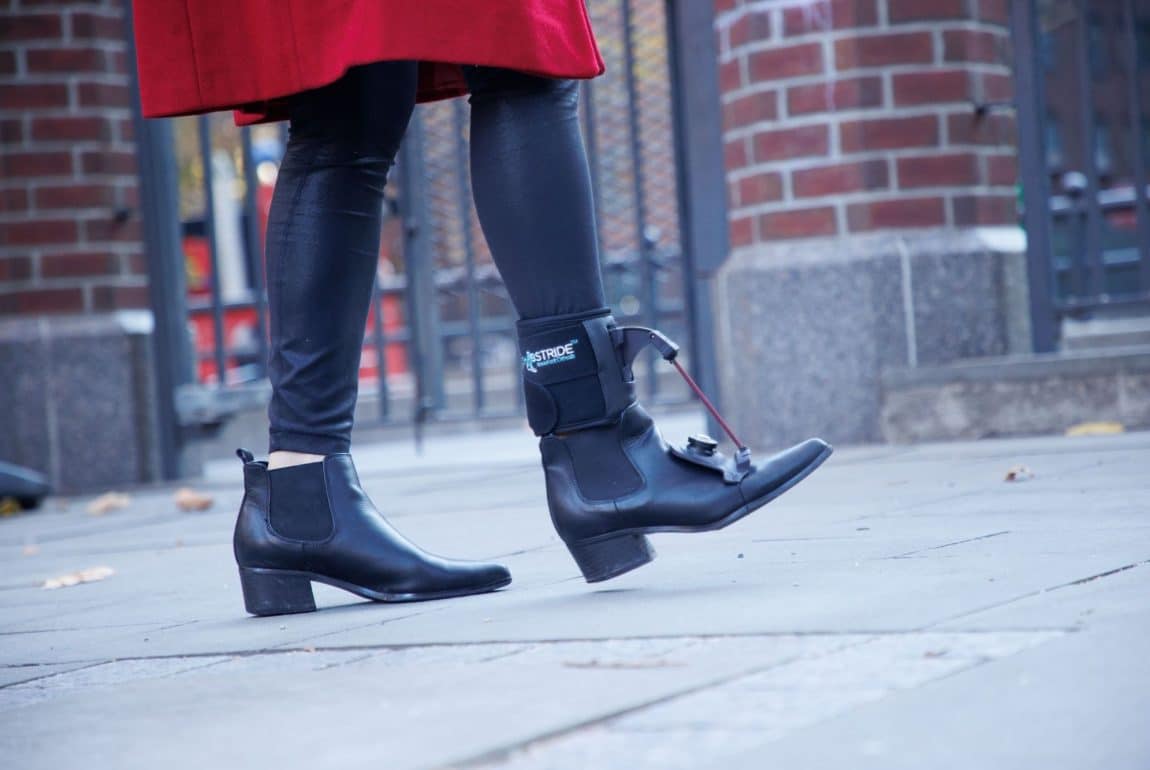
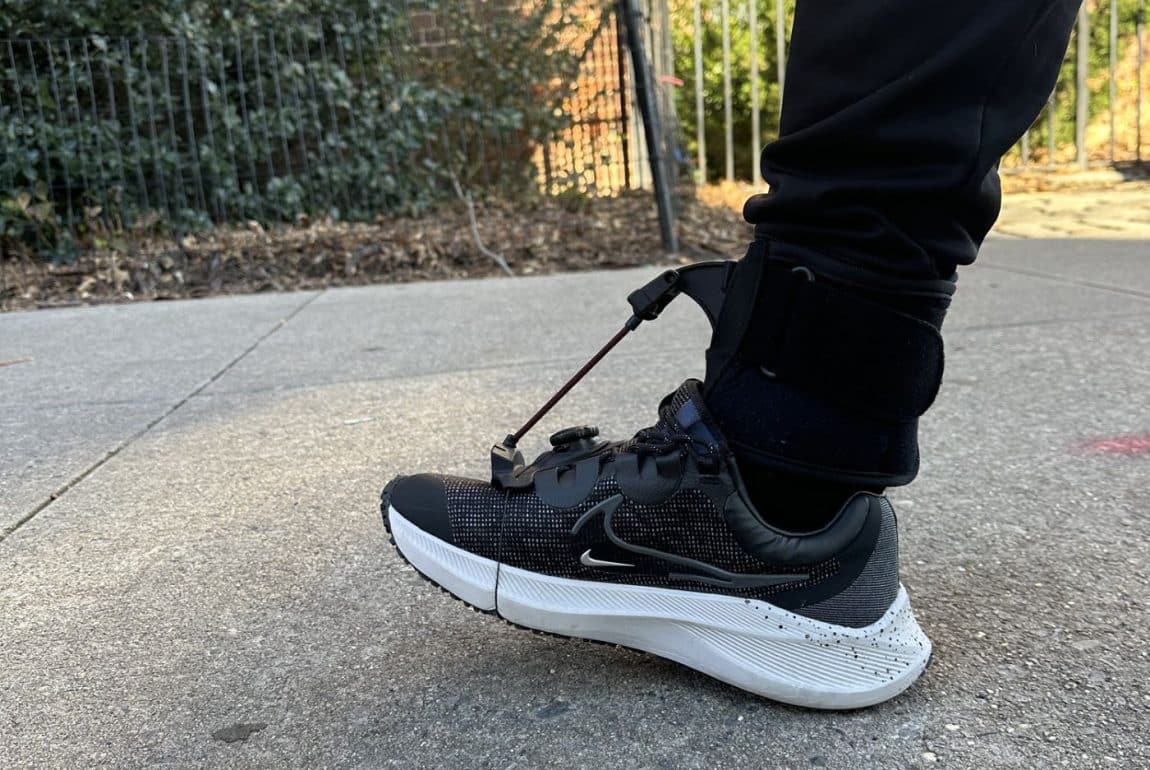
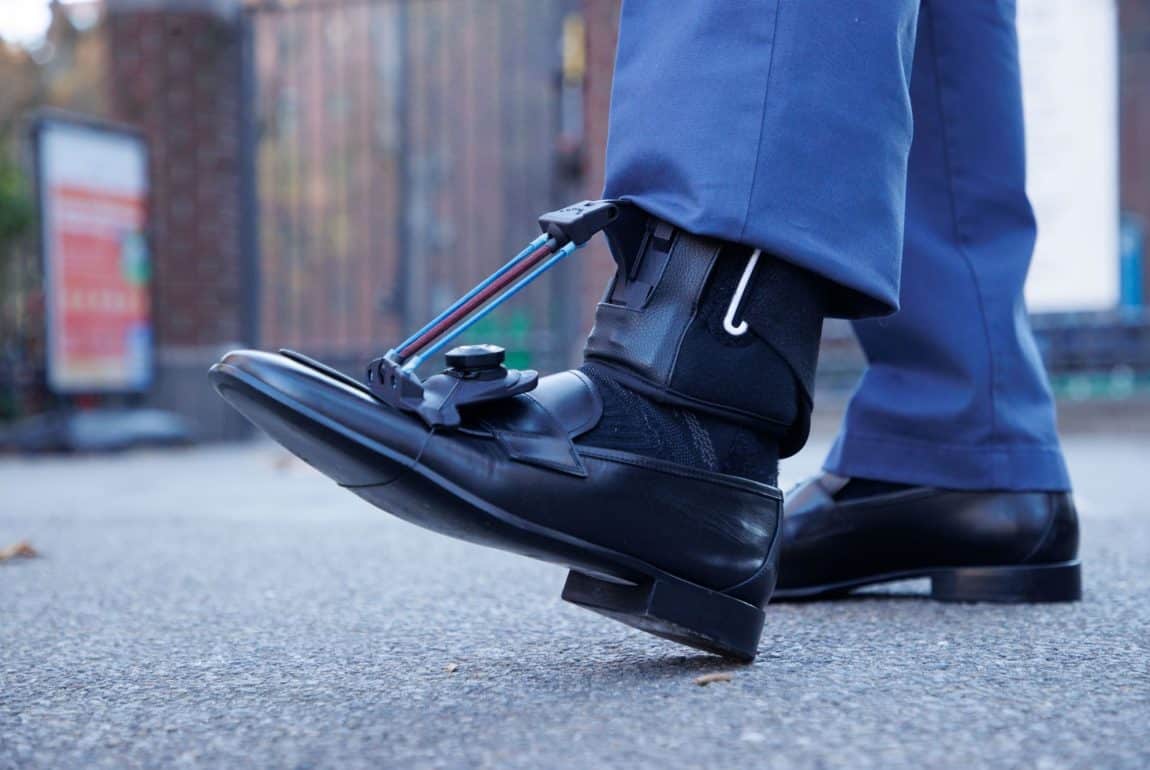
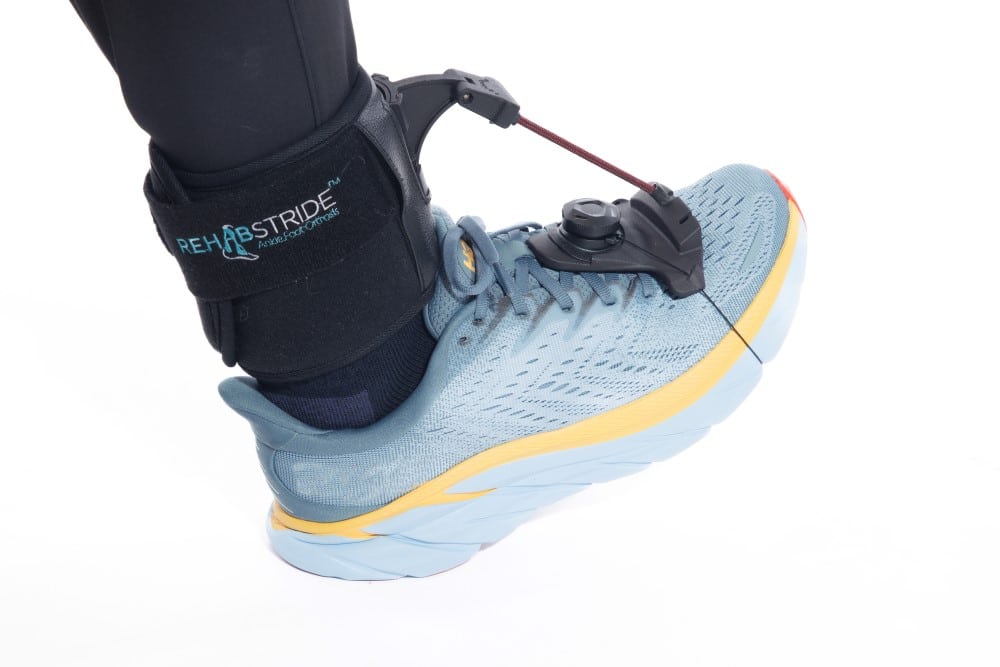
Rather than relying on rigid shells or fixed springs, RehabStride™ uses a patented tension-adjustable cable system that provides dynamic dorsiflexion assistance. This allows the user to initiate ankle motion while receiving just enough support to prevent foot drop.
How RehabStride™ AFO Redefines Foot Drop Support
RehabStride™ AFO was developed by physical therapy experts to address the shortcomings of passive braces. Its design focuses on function, adaptability, and natural gait mechanics.
Key features include:
Dynamic dorsiflexion assistance rather than fixed positioning
Tension-adjustable system that can be customized to the user
Active ankle engagement to encourage muscle use
Low-profile, lightweight design compatible with everyday footwear
Natural gait support across different walking speeds
Users often report that for the first time, they can actually feel their ankle moving again — lifting the foot, controlling the step, and maintaining balance more effectively.
📞 Free U.S. & Canada shipping | 🎯 FSA/HSA eligible | 💬 1-on-1 virtual setup included
Why Active Support Improves Balance and Confidence
Balance is not just about preventing falls; it’s about the body’s ability to make constant micro-adjustments. Passive AFO braces remove those adjustments. RehabStride™ AFO restores them.
By allowing controlled ankle motion:
Proprioception improves
Step timing becomes more natural
Walking speed can increase safely
Confidence improves with movement, not rigidity
This is especially important for individuals who want to remain active, walk longer distances, or continue rehabilitation rather than plateau.
Who Can Benefit from RehabStride™ AFO
RehabStride™ AFO is commonly used by people with:
Mild to moderate foot drop
Stroke-related gait deficits
Neuropathy-related foot weakness
Peroneal nerve injury
MS-related dorsiflexion weakness
Because the tension system is adjustable, the brace can evolve with the user — supporting recovery, not freezing it.
Active vs Passive AFO: The Real Difference
| Passive AFO | RehabStride™ AFO |
|---|---|
| Locks ankle | Assists movement |
| Fixed support | Adjustable support |
| Reduced muscle use | Encourages activation |
| Rigid gait | Natural gait |
| Stability only | Stability + mobility |
This difference helps explain why many people who struggled with traditional AFOs feel an immediate improvement when switching to RehabStride™.
Choosing the Right AFO for Foot Drop
The best AFO brace for foot drop is not the stiffest one — it’s the one that restores the most function safely. For many users, that means choosing active support over passive restriction.
RehabStride™ AFO represents a modern approach to foot drop treatment: one that prioritizes movement, adaptability, and confidence rather than immobilization.
Final Thoughts
Foot drop doesn’t just affect walking — it affects independence, confidence, and quality of life. While traditional AFO braces focus on holding the foot in place, they often fall short of supporting real movement.
RehabStride™ AFO changes that by offering active dorsiflexion assistance, allowing users to move more naturally and confidently with every step.
When support works with the body instead of against it, progress becomes possible again.
Sources
People also ask
1) What’s the difference between an “active” AFO and a “passive” AFO for foot drop?
A passive AFO mainly holds the foot in a set position to prevent toe drag. An active-support AFO is designed to assist dorsiflexion while still allowing more natural ankle motion, helping many users feel less “locked” and more in control while walking.
2) Why do many traditional AFO braces feel stiff or limiting?
Many rigid and semi-rigid ankle-foot orthoses restrict ankle movement to improve safety. That can reduce the ankle’s ability to adapt during walking—especially when changing speed, turning, or walking on uneven ground—so the gait may feel less natural.
3) How does RehabStride™ AFO support foot drop differently?
RehabStride™ AFO is designed to provide dynamic dorsiflexion assistance with an adjustable tension system, so support can be dialed in to match the user’s needs. The goal is to help with foot clearance while encouraging controlled movement rather than fully immobilizing the ankle.
4) Who is RehabStride™ AFO for?
RehabStride™ AFO may be helpful for people with foot drop related to conditions such as stroke recovery, peroneal nerve injury, neuropathy, or neurological disorders where dorsiflexion weakness affects walking. The best fit depends on your specific gait pattern, strength, and goals.
5) Can an AFO help with balance, not just toe drag?
Often, yes. When the foot clears the ground more reliably and the step feels more controlled, many people report feeling steadier. Balance is complex, but improved foot positioning and timing can make walking feel safer and more confident.
6) Will wearing an AFO weaken my muscles?
It depends on the brace style, how it’s used, and your rehab plan. Some people worry that fully rigid bracing can reduce muscle demand. Designs that encourage active movement—paired with strengthening and gait training—may help support function while you continue rehab.
7) How do I know what tension setting is right on RehabStride™ AFO?
A good starting point is the lowest tension that still provides consistent foot clearance. Many users benefit from fine-tuning based on walking speed, fatigue, and terrain. A clinician or onboarding support can help you find a setting that feels stable without over-assisting.
8) Can RehabStride™ AFO fit in normal shoes?
RehabStride™ AFO is designed to be low-profile and shoe-friendly for many common footwear styles. Fit can vary depending on shoe width, insole depth, and lacing structure, so choosing supportive shoes with enough room is usually best.
Related posts:
- How to Find the Right Foot Drop Brace
- FES vs. AFO Braces for Foot Drop: Pros, Cons, and How to Choose
- A Comprehensive Guide to Foot Drop: Causes, Symptoms, and Treatment Options
- Why AFO Fit Matters More Than You Think: Preventing Pain, Fatigue, and Falls
- Foot Drop Solutions Compared: Custom AFO vs. Off-the-Shelf Brace