By Gene Shenker, DPT, Founder & CEO, RehabStride™ AFO
For many survivors of a stroke or neurological injury, the simple act of walking—something once as natural as breathing—suddenly requires the concentration of a high-wire artist. Foot drop, the inability to lift the front part of the foot, turns a trip to the mailbox into a high-stakes obstacle course.
But here is the good news: modern rehabilitation is moving away from just “getting by.” Choosing the right afo brace is no longer just a safety precaution; it is an act of reclamation. It is about moving from a state of compensation to a state of active recovery and empowerment.
The Psychological Barrier of Mobility
Foot drop is more than a physical symptom; it is a barrier to independence. When you cannot trust your foot to clear the ground, your world tends to shrink. You stop looking at the horizon and start staring at your toes. This constant vigilance is mentally draining and often leads to a “steppage gait”—a high-knee walking pattern that is physically taxing on the hips and back.
A modern foot drop brace should do more than just lift your foot. It should lift the mental “weight” of walking, allowing you to regain your confidence and focus on the world around you instead of the floor.
The Milestone of the First Fitting
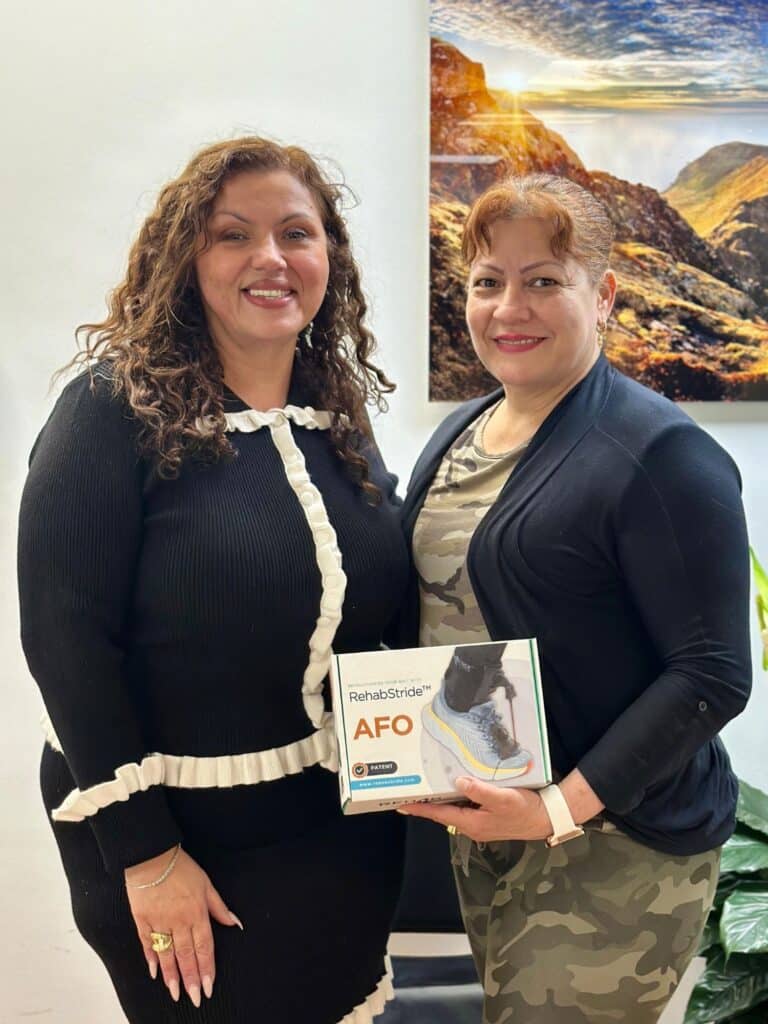
There is a specific, transformative energy that occurs when a patient realizes they aren’t stuck with a clunky, heavy medical device. In our recent clinical trials, the moment of “unboxing” often becomes a celebration. Seeing a streamlined, lightweight tool for the first time marks the transition from being a “patient” to being an active participant in one’s own healing.
When a survivor realizes their equipment is designed for their lifestyle—not just their diagnosis—the path to independence feels much shorter.
Where Function Meets Personal Identity
One of the primary reasons people stop using a traditional brace for foot drop is the aesthetic “medicalization” of their wardrobe. Rigid plastic shells often force users into oversized, unattractive shoes, which can negatively impact self-esteem.
We believe that recovery shouldn’t require you to sacrifice your personal style. Modern designs allow the support system to integrate seamlessly with the shoes you already love:
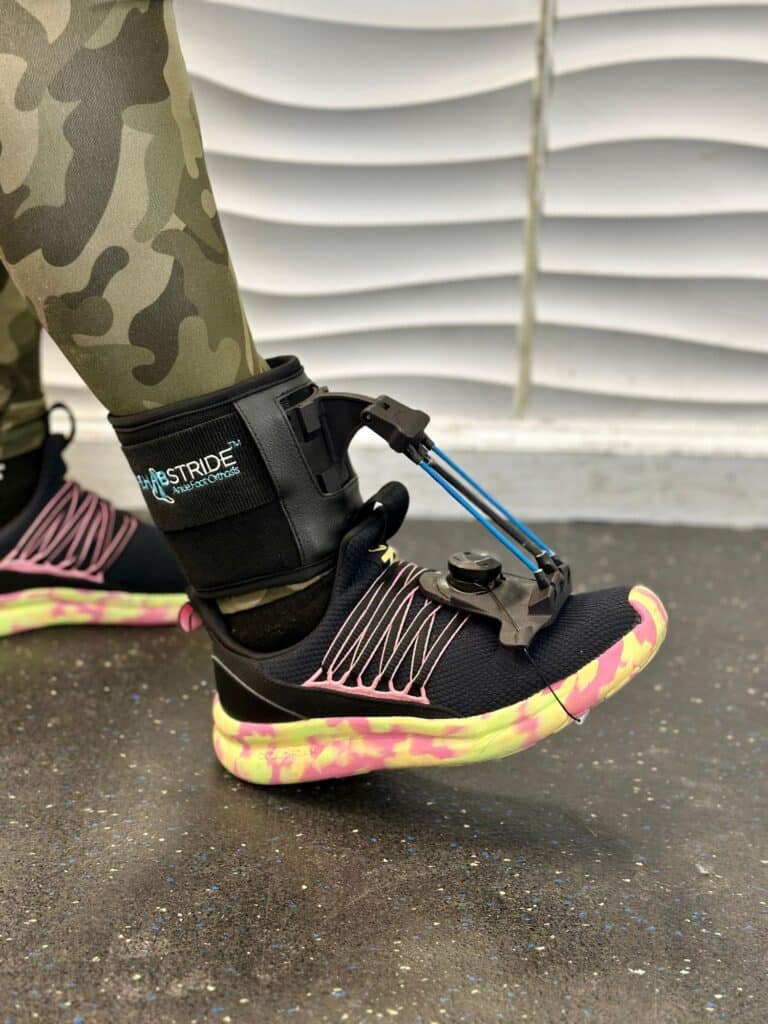
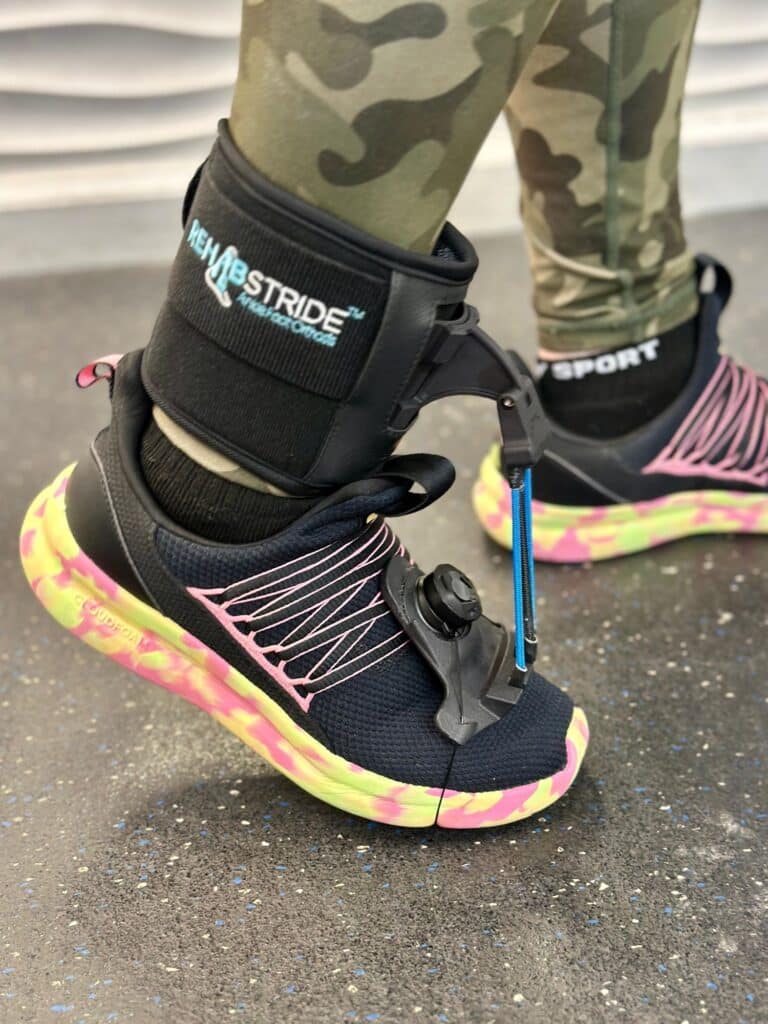
Low-Profile Integration: Minimalist designs sit comfortably against the ankle and attach directly to the exterior of standard athletic sneakers.
Athletic Aesthetics: Whether you’re wearing colorful gym shoes or your favorite leggings, a well-designed brace remains a subtle, functional accessory.
Minimalist Hardware: By replacing heavy plastic walls with dynamic tension systems, the device maintains a sleek look that fits into everyday life without drawing unwanted attention.
Progress in Motion: The Dynamic Difference
The true value of a support system is revealed in its movement. Traditional rigid braces can cause a “clunky” walk because they lock the ankle in place, preventing a natural heel-to-toe transition.
In recent video trials of our dynamic system, the difference is striking:
The “Active” Lift: You can see the foot clearing the ground with ease as the leg swings forward.
Fluidity: The user achieves a rhythmic, smoother step rather than a flat-footed “thud.”
Effortless Transition: Because the brace provides assistance rather than a total lockout, the rest of the body can relax into a more natural posture.
The Science of Retraining the Brain
As we’ve explored, the brain is a “plastic” organ. It is constantly looking for ways to rewire itself through neuroplasticity. The right afo brace acts as a teacher for your brain in several key ways:
Preventing Atrophy: Because a dynamic brace provides “just enough” assistance, your muscles stay engaged. This prevents the “learned non-use” that often occurs with totally rigid devices.
Encouraging High Repetition: Comfort leads to consistency. If a device is comfortable and looks good, you take more steps. More steps equal more opportunities for the brain to build new neural pathways.
Restoring Sensory Input: A dynamic system allows the ankle to experience a range of motion. This sensory feedback is the “data” your motor cortex needs to relearn how to walk.
Choosing Your Path Forward
When you are looking for a solution to foot drop, ask yourself: Does this device hold me back, or does it move me forward?
The goal of modern rehabilitation is to move beyond the clinic and back into the rhythm of daily life. Whether you are navigating a crowded grocery store or a quiet park, the right support is the one that lets you forget you’re wearing it.
The road to recovery is built one step at a time. Make sure every step is teaching your brain how to walk again.
Related posts:
- Step Into the Future: Discover the Power of RehabStride AFO Brace for Foot Drop Recovery
- Top 7 Ways RehabStride™ AFO Brace Enhances Your Daily Activities and Independence
- The Role of Dorsi Flexion in Safe and Stable Walking: What You Need to Know
- Exercises for Foot Drop with RehabStride™: A Step-by-Step Home Program
- Ankle Foot Orthosis Demystified: Choosing the Right Brace for You