By Gene Shenker, DPT, Founder & CEO, RehabStride™ AFO
Living with foot drop presents a unique set of daily challenges, but perhaps one of the most frustrating is simply getting dressed in the morning. If you have been prescribed an Ankle Foot Orthosis (AFO) to help lift your foot and prevent tripping, you are likely intimately familiar with the footwear struggle.
Thousands of patients search for the “best shoes to wear with an AFO brace” every single month. Trying to squeeze a rigid, plastic medical device into your favorite pair of sneakers usually ends in frustration, blisters, and compromised mobility.
But what if the problem is not your shoes? What if the problem is the brace itself?
In this comprehensive guide, we will break down exactly what features you need to look for if you are trying to fit a traditional internal AFO into a shoe. More importantly, we will explore why modern advancements in external bracing – like the RehabStride™ dynamic AFO – might mean you never have to shop for specialized orthopedic shoes again.
The Challenge of Traditional AFOs and Footwear
Standard AFOs, often made of rigid plastics or carbon fiber leaf-springs, are designed to hold your ankle at a strict 90-degree angle. Because these devices are worn inside the shoe, they take up a massive amount of internal volume.
The footplate of an internal AFO sits beneath your heel and the sole of your foot, while the upright shell wraps around your calf and ankle. When you try to insert your foot – along with this thick plastic shell – into a standard shoe, the friction and pressure can be immense. This forces most foot drop patients to drastically alter their shoe-buying habits, often sacrificing personal style, comfort, and financial resources just to walk safely.
Key Features to Look for in AFO-Friendly Shoes
If you are currently relying on a traditional internal AFO, standard footwear simply will not work. To avoid pressure sores and ensure the brace functions correctly, you must seek out shoes that feature a very specific set of structural modifications.
Here are the non-negotiable features you need to look for when shopping for AFO-accommodating shoes:
Extra Depth and Volume: The shoe must have a deeper vertical toe box and midfoot area. The plastic footplate of the AFO will elevate your foot, meaning a standard shoe will immediately crush the top of your foot against the tongue and laces.
Fully Removable Insoles: To create the necessary depth, the factory insoles must be completely removable so the AFO footplate can rest flat against the bottom of the shoe.
Wide or Extra-Wide Widths: Internal braces add significant width to your heel and ankle. A shoe with a wider base is essential to prevent the hard edges of the brace from digging into the sides of the shoe (which causes rapid wear and tear) and your skin.
A Firm Heel Counter: The heel counter is the rigid back part of the shoe. Because an internal AFO acts as a lever against your leg, the shoe must have a rock-solid heel counter to keep the brace anchored in place during the swing phase of your gait.
Extended Closures: You will need shoes that open extremely wide to allow the rigid AFO to slide in. Look for extra-long laces, adjustable Velcro straps, or BOA dial closure systems.
The Hidden Costs of Sizing Up
Because finding shoes with all the above features is difficult, many patients resort to a common, yet problematic, workaround: buying shoes one to two sizes larger than their actual foot size.
While sizing up allows the internal AFO to fit, it creates a new set of biomechanical problems. Your unaffected foot is now swimming in a shoe that is far too large, which alters your natural gait, reduces stability, and can lead to knee, hip, and lower back pain over time. Furthermore, medical-grade orthopedic shoes are notoriously expensive, placing an unfair financial burden on patients managing chronic conditions like stroke recovery, multiple sclerosis, or peripheral nerve injury.
The Dynamic External Solution: Why You Might Not Need Special Shoes
What if you didn’t have to change your footwear at all?
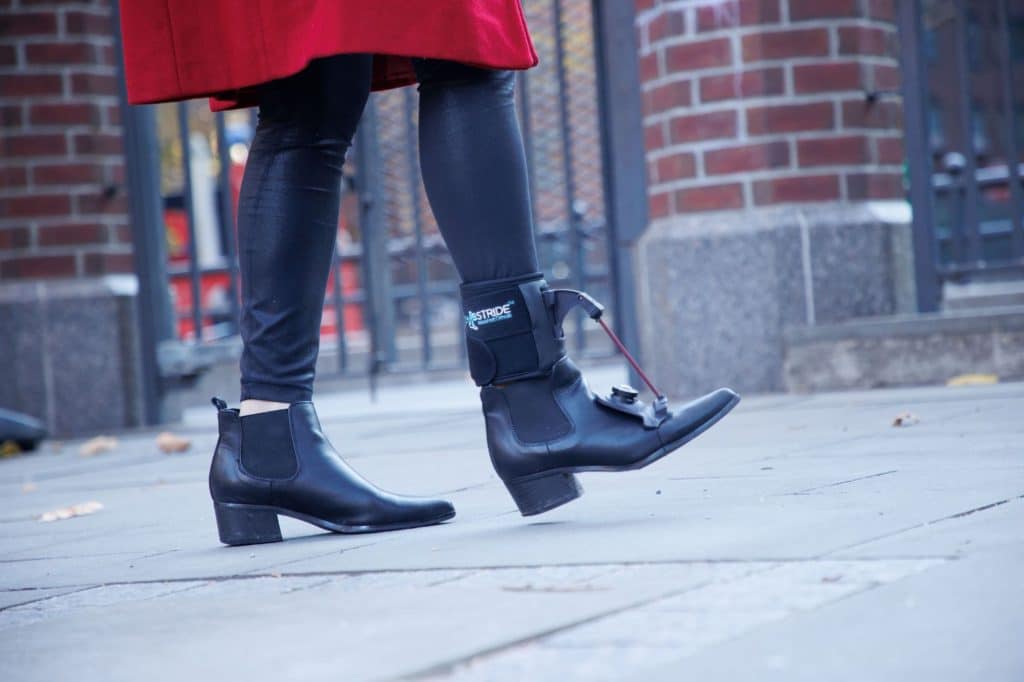
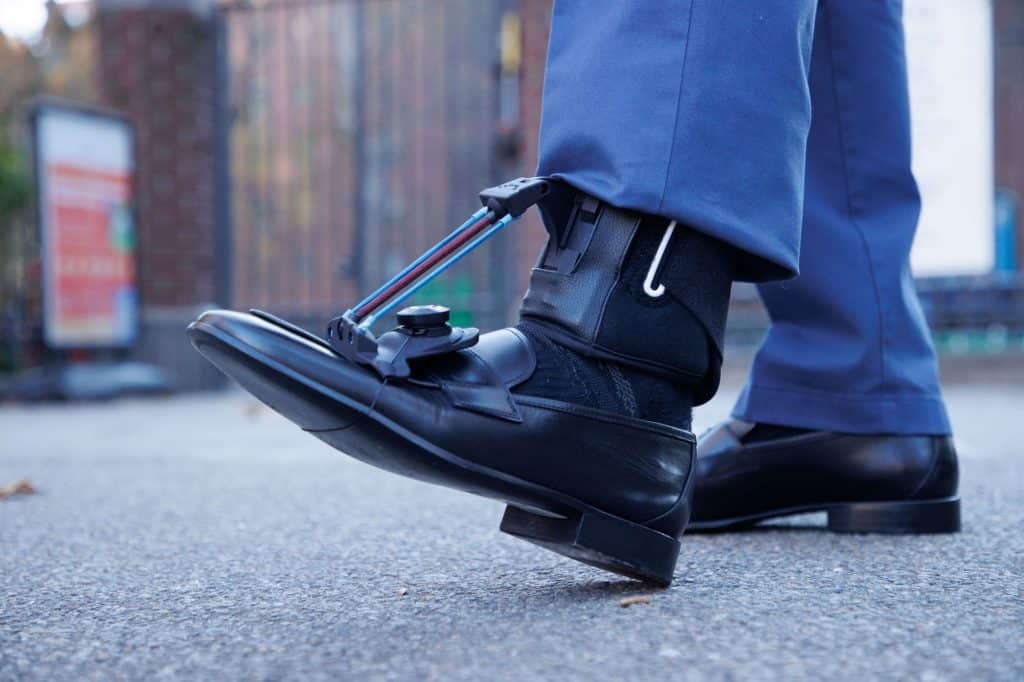
The field of orthotics has evolved, recognizing that locking the ankle and forcing patients into oversized shoes is counterproductive to true rehabilitation. This is where the RehabStride™ AFO Brace changes the paradigm. Developed by clinicians with extensive experience in physical therapy and rehabilitation in New York City, RehabStride takes a completely different approach: it is a dynamic external AFO.
By mounting securely to the outside of your footwear, RehabStride eliminates the internal bulk completely.
The Dynamic External Solution: Why You Might Not Need Special Shoes
| Feature | Traditional Internal AFO | RehabStride™ External AFO |
|---|---|---|
| Footwear Compatibility | Requires wide, deep, orthopedic shoes | Fits standard, everyday sneakers |
| Sizing Required | Often requires buying 1-2 sizes larger | Wear your true-to-size shoes |
| Ankle Movement | Locked at 90 degrees (Immobilized) | Dynamic (Allows plantar-flexion) |
| Rehabilitation Focus | Passive maintenance | Active muscle engagement |
How External Bracing Improves Gait and Independence
When you remove the plastic from the inside of your shoe, you open the door to a more natural, fluid walking experience. RehabStride™ utilizes a patented, tension-adjustable cable system that actively assists with dorsiflexion—lifting the front of your foot to ensure safe clearance over steps and uneven terrain.
Because there is no rigid shell immobilizing your joint inside a tight shoe, the brace allows for natural plantar-flexion. This means that during the double-support phase of your gait, you can still push off naturally from the ball of your foot. This active propulsion not only makes walking more efficient but acts like a personal physiotherapist by maintaining calf strength and promoting the recovery of the affected dorsiflexor muscles over time.
Furthermore, the external design includes a quick-release mechanism, allowing users to easily unhook the tension for periods of rest without having to completely unlace and remove their shoes.
Reclaim Your Wardrobe and Your Stride
Managing foot drop is challenging enough without the added stress of overhauling your entire shoe collection. You should not have to sacrifice your comfort, your personal style, or the biomechanics of your healthy foot just to walk safely.
By upgrading to a dynamic external solution like the RehabStride™ AFO, you can finally put the days of oversized, clunky orthopedic shoes behind you. Reclaim your independence, wear the sneakers you love, and step confidently into a more natural, rehabilitative stride.
(Want to see it in action? Explore how RehabStride adapts to everyday footwear and actively supports gait recovery by visiting our product page today.)
Frequently Asked Questions
Q: Do I need to buy bigger shoes if I use an AFO brace? A: With traditional internal AFOs, patients usually have to buy shoes 1 to 2 sizes larger to accommodate the rigid plastic shell. However, dynamic external AFOs like RehabStride mount to the outside of your footwear, allowing you to wear your standard, true-to-size shoes.
Q: Can I wear regular sneakers with a foot drop brace? A: Traditional rigid AFOs require specialized, extra-depth orthopedic shoes with wide toe boxes and removable insoles. External AFO designs are universally compatible with standard, everyday sneakers.
Q: What is the difference between a rigid AFO and a dynamic external AFO? A: A rigid AFO locks your ankle at a 90-degree angle and immobilizes the joint, leading to passive maintenance. A dynamic external AFO supports safe dorsiflexion while allowing unrestricted plantar-flexion, enabling a natural push-off and active muscle engagement.
Sources & Clinical References:
Mayo Clinic: “Foot drop – Symptoms and causes.” This comprehensive overview defines foot drop not as a disease, but as a symptom of underlying neurological, muscular, or anatomical problems. It details how the inability to lift the front part of the foot leads to a compensatory “steppage gait” where the thigh is raised higher than normal.
National Center for Biotechnology Information (NCBI) – StatPearls: “Foot Drop.” This clinical resource explains that foot drop is characterized by weakness or paralysis of the dorsiflexor muscles, leading to an unsteady, compensatory gait. It outlines that treatment approaches vary based on the underlying etiology and can include physical therapy and splinting.
MDPI Systematic Review: “The Role of Ankle–Foot Orthoses in Improving Gait in Children and Adolescents with Neuromotor Disability.” This recent meta-analysis evaluated gait performance with various AFOs. The study concluded that flexible AFOs are preferable to rigid AFOs because they preserve the peak ankle power generated at push-off.
Related posts:
- Top 7 Ways RehabStride™ AFO Brace Enhances Your Daily Activities and Independence
- Reclaiming Movement: How the Right AFO Empowers Everyday Life
- Exercises for Foot Drop with RehabStride™: A Step-by-Step Home Program
- Step Into the Future: Discover the Power of RehabStride AFO Brace for Foot Drop Recovery
- The Role of Dorsi Flexion in Safe and Stable Walking: What You Need to Know